Problem explanation
When RV batteries fail to charge from shore power or the alternator, the issue typically stems from a failed converter/charger unit, blown reverse polarity fuses, or corroded 12V terminal connections. This behavior prevents the house system from maintaining the voltage levels required to operate essential DC loads and appliances during your trip.
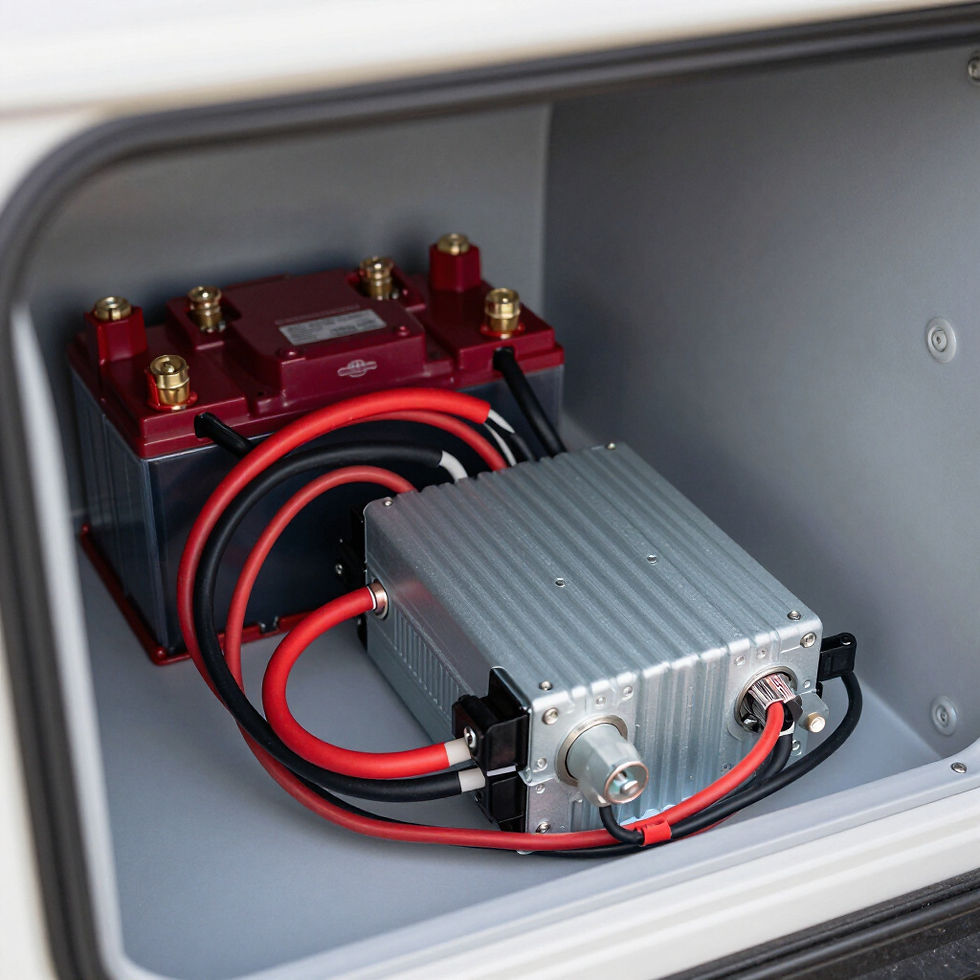
Step-by-step diagnosis
1. Verify Battery Disconnect Switch position
Ensure the 'Store/Use' or 'Disconnect' switch is in the 'ON' or 'USE' position. If disconnected, the charger cannot reach the batteries.
2. Inspect main 12V fuses and DC breakers
Check the 30-50 amp main fuses near the battery and the 12V DC breakers in your power center. Reset any tripped breakers or replace blown fuses.
3. Check for loose or corroded battery terminals
Visually inspect cables for loose connections, heavy corrosion, or fraying. A bad ground connection often prevents effective charging.
4. Measure voltage at battery pins (Look for 13–14V DC)
Using a multimeter, check the voltage at the battery posts while plugged in. A working charger should show 13.1V to 14.4V DC.
5. Verify converter/charger fan operation
Check if the converter/charger cooling fan is turning. If the unit is silent and hot while heavily used, it may be thermal tripping.